2 Jun 2026
Biometric Authentication Protocols Enhancing Security in Recurring Mobile Transaction Approvals
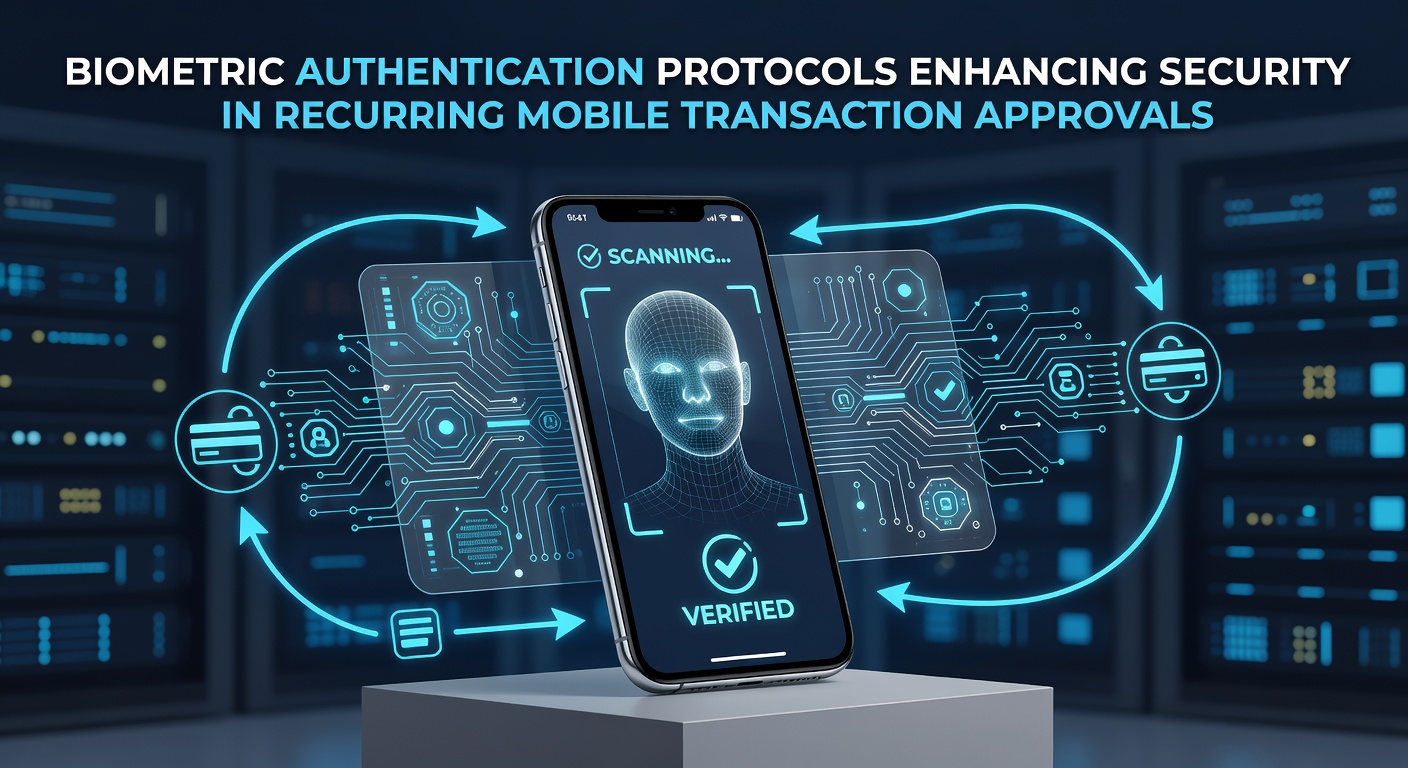
Biometric authentication protocols have become central to securing recurring mobile transaction approvals because they replace static credentials with physiological or behavioral markers that prove difficult to replicate at scale. Researchers have documented how fingerprint, facial, and iris recognition systems integrate with mobile hardware to verify user identity during subscription renewals, account top-ups, and scheduled payments without requiring manual entry of passwords or one-time codes each cycle. Data from industry reports shows adoption rates climbing steadily as mobile operating systems embed these sensors by default, reducing reliance on knowledge-based factors that remain vulnerable to phishing and credential stuffing.
Core Components of Biometric Protocols for Recurring Payments
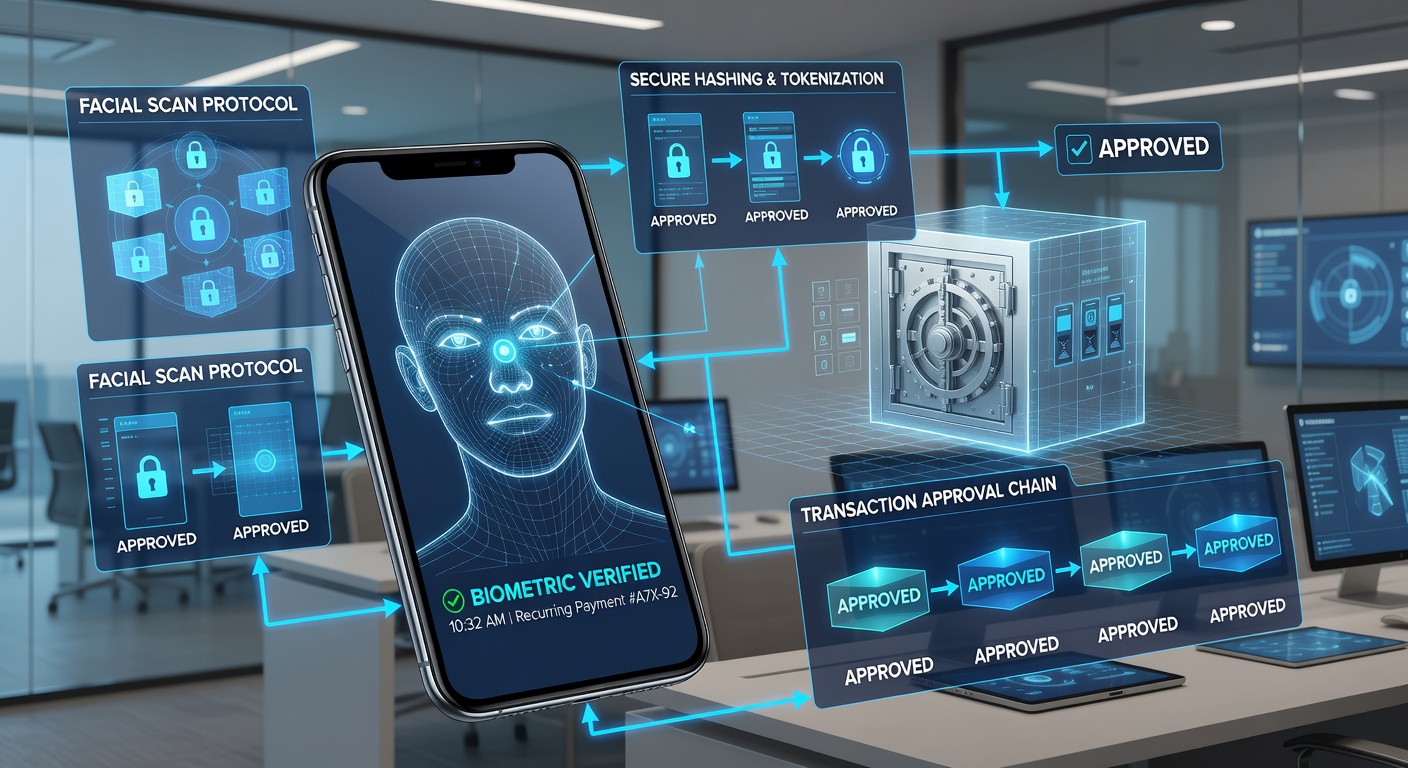
Modern protocols such as FIDO2 and WebAuthn establish public-key cryptography pairs on the device itself, storing private keys within secure enclaves while transmitting only signed challenges to payment processors. This architecture limits exposure of sensitive data across networks during repeated approvals, and it supports seamless integration with recurring billing platforms that trigger charges on fixed intervals. Observers note that behavioral biometrics, including touch dynamics and gait analysis collected passively, add continuous verification layers without interrupting the user flow in subscription services.
Hardware requirements vary by region yet follow common standards set by organizations including the National Institute of Standards and Technology, which published updated guidelines on biometric performance metrics in 2025. Those guidelines emphasize false acceptance and rejection rates that must stay below defined thresholds before systems receive certification for financial use. In practice, devices running recent Android and iOS versions meet these benchmarks through on-device processing that keeps raw biometric templates isolated from cloud environments.
Security Advantages Over Traditional Methods
Password fatigue often leads users to reuse credentials across multiple services, creating single points of failure during recurring transaction windows. Biometric protocols address this by binding authentication to unique traits that cannot be transferred or guessed in the same manner. Studies conducted by academic teams at institutions across North America and Europe indicate that transaction approval times drop by measurable margins when facial recognition replaces SMS-based verification, while fraud rates in monitored cohorts decline correspondingly.
Encryption of biometric data occurs locally before any network transmission occurs, and tokenization further decouples the biometric sample from actual payment credentials. This separation proves especially relevant for cross-border recurring charges where regulatory frameworks differ, because the protocol transmits assertions rather than raw identifiers that might trigger additional compliance checks. In June 2026, several payment networks began enforcing stricter token-binding requirements that align directly with these biometric frameworks, prompting platforms to update their mobile SDKs accordingly.
Implementation Patterns Across Mobile Ecosystems
Payment service providers integrate biometric checks at multiple points within the approval sequence, sometimes requiring a second factor only when risk-scoring algorithms flag anomalies such as unusual device location or transaction amount. This risk-based approach preserves convenience for routine renewals while escalating verification when patterns deviate from established baselines. European regulatory bodies have issued guidance documents that encourage such layered systems, and similar recommendations appear in materials released by Canadian authorities focused on consumer protection in digital finance.
Voice biometrics appear in certain voice-activated payment flows, where spectral analysis of spoken passphrases supplements device-bound methods. Although adoption remains narrower than fingerprint or facial options, research from Australian universities highlights accuracy improvements when combined with liveness detection that distinguishes live speech from recordings. These combined modalities help platforms maintain security standards even as users interact with recurring services through smart speakers or automotive interfaces.
Privacy Considerations and Regulatory Alignment
Storage of biometric templates within secure hardware modules limits the scope of potential breaches, yet questions around consent and data retention persist across jurisdictions. Frameworks such as the EU's data protection regulations require explicit user agreement and the right to deletion, prompting developers to design opt-in mechanisms that explain biometric usage in plain language before activation. Industry groups in Asia-Pacific markets have published parallel best-practice documents that emphasize transparency without mandating identical procedures.
Interoperability between different biometric vendors and device manufacturers continues to improve through standardized APIs that abstract hardware differences. This standardization reduces friction for developers building applications that handle recurring approvals across diverse user bases, and it supports future updates as sensor technology advances. Figures released by research consortia tracking global payment security trends reveal that platforms adopting these protocols report fewer account takeover incidents compared with those relying solely on legacy authentication flows.
Future Directions in Protocol Development
Ongoing work focuses on post-quantum cryptography integration to protect biometric-derived keys against emerging computational threats, with initial test implementations appearing in select mobile wallets during 2025. These efforts aim to maintain long-term viability of current biometric investments while recurring transaction volumes grow across subscription-based services. Collaboration between standards bodies and hardware manufacturers accelerates the rollout of updated specifications that accommodate new sensor types without requiring complete system overhauls.
Conclusion
Biometric authentication protocols continue to reshape security practices for recurring mobile transaction approvals by leveraging device-native capabilities and cryptographic binding. The shift away from reusable credentials toward physiological verification reduces exposure points while supporting the scale required by subscription economies. As standards evolve and regulatory expectations tighten, platforms that align their systems with these protocols position themselves to handle increasing transaction volumes with maintained integrity across mobile environments.