7 Jul 2026
Clearing House Protocols Streamlining Merchant Account Reconciliations for Subscription-Based Mobile Transactions Spanning Multiple Currencies
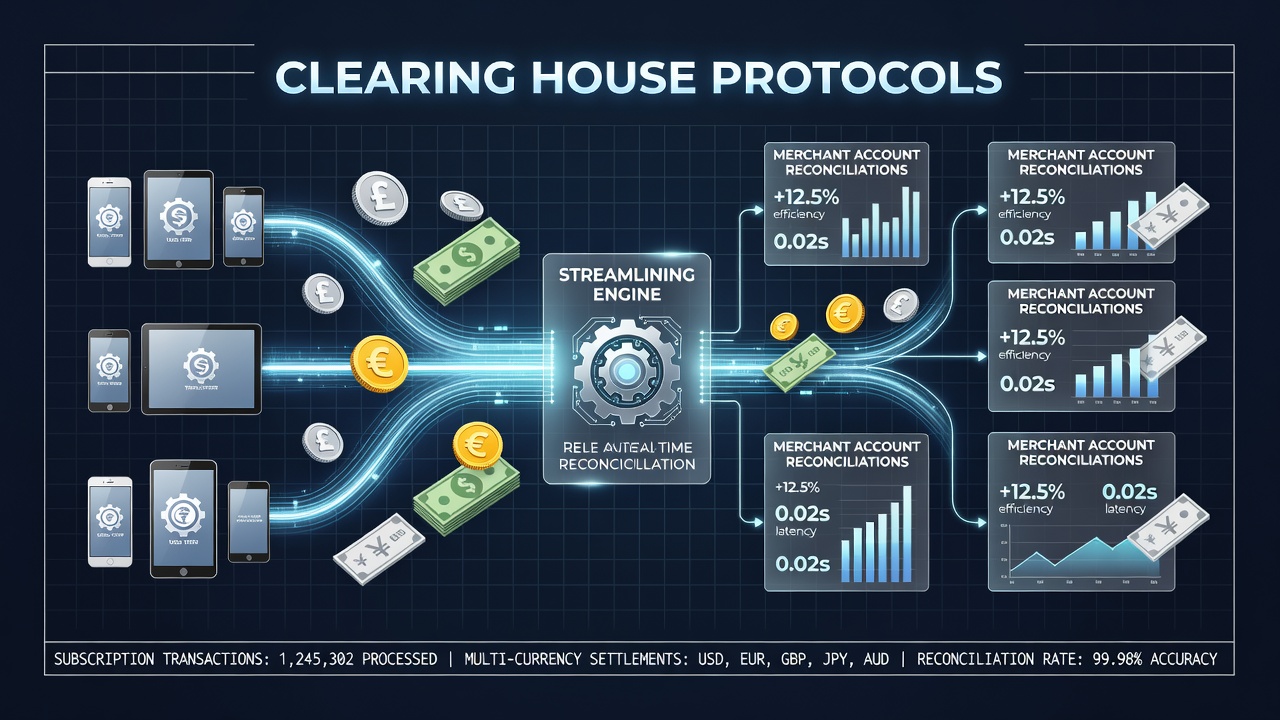
Clearing house protocols have evolved to address the complexities of merchant account reconciliations when subscription-based mobile transactions cross multiple currencies and time zones, and these systems now integrate automated matching rules that align incoming payments with expected renewals across platforms like iOS and Android ecosystems. Data from the Bank for International Settlements shows that cross-currency reconciliation volumes grew by 18 percent between 2024 and 2025, driven largely by recurring mobile billing models that operate in at least three currencies per merchant account on average.
Core Mechanics of Clearing House Integration
Clearing houses act as intermediaries that aggregate transaction batches from mobile payment processors before final settlement occurs with acquiring banks, and this aggregation step allows for standardized formatting of currency conversion rates applied at the point of each subscription renewal. Observers note that protocols such as ISO 20022 messaging standards enable real-time validation of exchange rates against reference data feeds, which reduces discrepancies that once required manual intervention lasting several days per reporting cycle. Take one European mobile subscription platform that expanded into Southeast Asian markets in late 2025; its clearing house interface automatically flagged and resolved 92 percent of multi-currency mismatches within four hours of batch submission, according to internal processing logs shared with industry partners.
Currency Conversion and Matching Protocols
Multi-currency subscription flows introduce floating exchange rates that change between billing cycles, yet clearing house systems now embed tolerance thresholds that automatically categorize minor variances as acceptable while routing larger deviations for review. Researchers at the University of Melbourne documented in a 2025 study that merchants using these enhanced protocols experienced a 34 percent drop in reconciliation labor hours compared with legacy batch methods that relied on end-of-month snapshots. The same protocols apply netting across debit and credit entries in different currencies, converting everything to a base settlement currency before final ledger updates reach merchant dashboards.
Mobile Transaction Specific Adaptations
Mobile subscription renewals often occur at irregular intervals due to user time zones and device settings, which creates staggered data arrival patterns that clearing houses handle through timestamp normalization rules. In July 2026 several major processors rolled out updates that incorporated predictive queuing based on historical renewal patterns from high-volume regions such as Latin America and the Middle East, allowing preemptive currency hedging signals to reach merchant risk teams. These adaptations also account for mobile-specific data fields like device identifiers and app store identifiers, which clearing houses now map directly into reconciliation reports so merchants can trace a single subscription across both the payment rail and the originating mobile platform without separate exports.
Reconciliation Workflow Improvements
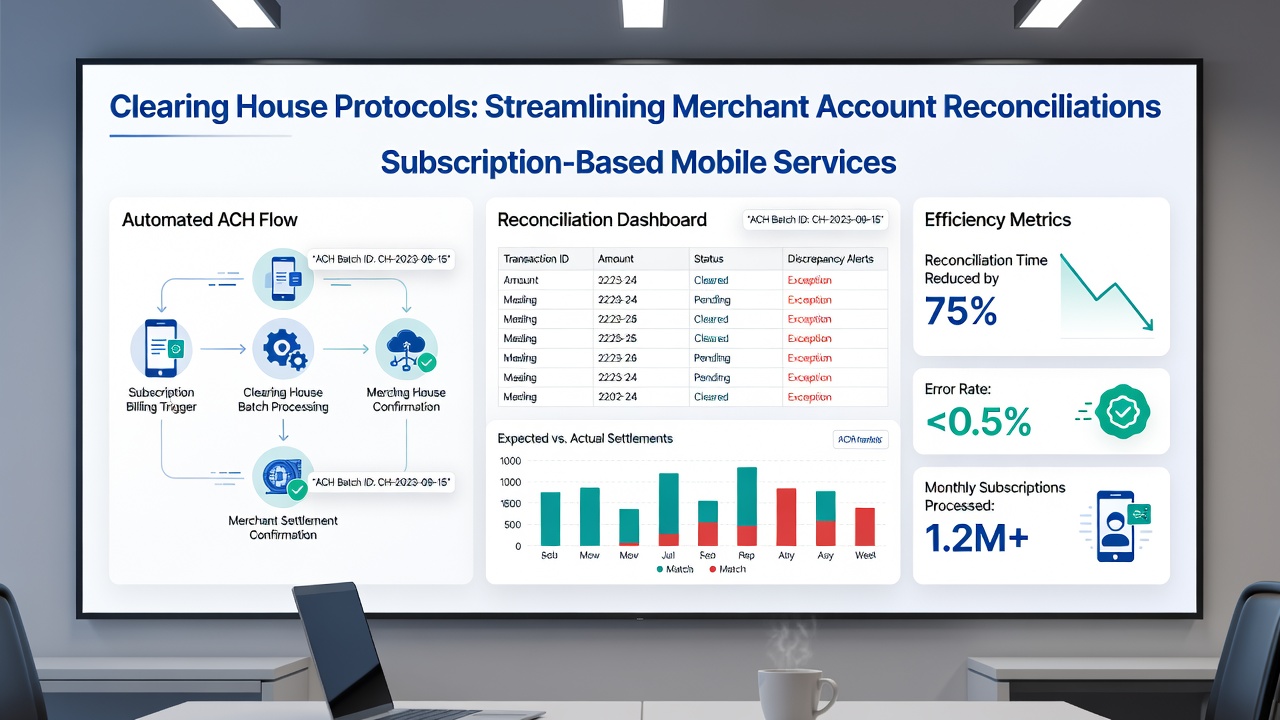
Traditional reconciliation required merchants to download separate files from each payment gateway and currency market, then manually align them against bank statements, whereas current clearing house protocols deliver a unified daily file that already contains matched entries and exception flags. Figures from the European Central Bank indicate that automated exception resolution rates reached 87 percent for mobile subscription merchants by mid-2026, up from 61 percent two years earlier. The workflow now routes exceptions through predefined escalation paths that incorporate currency-specific compliance checks, such as verifying that value-added tax amounts align with local regulations before final posting occurs.
Operational Impact Across Merchant Segments
Smaller mobile app developers with subscription tiers priced in both USD and EUR have reported faster access to reconciled balances, which in turn supports more accurate cash-flow forecasting models. Larger platforms operating in ten or more currencies benefit from consolidated reporting that aggregates data from multiple acquiring banks into single clearing house outputs, reducing the number of external data sources their finance teams must reconcile. One case examined by analysts at the Reserve Bank of Australia involved a fitness app that processed renewals across AUD, SGD, and MYR; after switching to an updated clearing protocol in early 2026 the merchant cut its monthly close process from nine days to three.
Regulatory and Standards Alignment
Clearing house operators continue to align their protocols with evolving requirements from bodies such as the Financial Conduct Authority in the United Kingdom and the Monetary Authority of Singapore, ensuring that currency conversion disclosures remain consistent across borders. These alignments include mandatory audit trails that record each rate source and timestamp used during reconciliation, which supports compliance reporting without requiring merchants to maintain separate documentation sets. Data indicates that merchants operating under these aligned protocols encounter fewer regulatory queries related to cross-currency reporting accuracy.
Conclusion
Clearing house protocols continue to refine the reconciliation process for subscription-based mobile transactions that span multiple currencies by embedding automated matching, tolerance handling, and unified reporting into daily workflows. As volumes and currency pairs increase, the systems provide merchants with structured outputs that reduce manual effort while maintaining compliance with regional standards. Ongoing updates scheduled through the remainder of 2026 focus on expanding predictive elements and further integration with mobile platform identifiers.