Cross-Border Checkout Friction: Why Currency Volatility Trips Up Global Sales and How Merchants Adapt
21 Apr 2026
Cross-Border Checkout Friction: Why Currency Volatility Trips Up Global Sales and How Merchants Adapt

Unpacking Cross-Border Checkout Friction
Cross-border e-commerce thrives on seamless transactions, yet friction at checkout often derails potential sales; merchants targeting international buyers face hurdles like mismatched currencies, unexpected fees, and fluctuating exchange rates that turn eager shoppers into drop-offs. Data from Baymard Institute reveals average cart abandonment rates hovering around 70% globally, with currency-related issues contributing significantly, especially in volatile markets where buyers hesitate over final costs that shift mid-process.
And while domestic sales flow smoothly with fixed pricing, cross-border deals expose consumers to real-time exchange rate surprises; a shopper in Brazil eyeing U.S. goods might add items priced at $50, only to see the total balloon to 300 reais due to a sudden real depreciation, prompting second thoughts and abandoned carts. Observers note this friction compounds with hidden conversion fees from banks or processors, creating a perfect storm that erodes trust and revenue.
What's interesting here lies in the scale: global e-commerce crossed $5 trillion in 2024 according to IMF estimates, yet unchecked checkout barriers siphon off billions annually, particularly as emerging markets like India and Southeast Asia drive growth but grapple with currency instability.
Currency Volatility Fuels the Fire
Currency volatility, defined by rapid and unpredictable exchange rate swings driven by inflation, geopolitical tensions, or policy shifts, disrupts checkout flows profoundly; central banks worldwide track these movements, with the European Central Bank reporting EUR/USD fluctuations exceeding 5% in single months during 2025 trade disputes. Turns out, such volatility hits hardest during peak shopping seasons, when consumers expect stable pricing but encounter mid-cart recalculations that feel like a bait-and-switch.
Take April 2026, for instance, when unexpected U.S. tariff announcements sparked a 7% USD surge against Asian currencies; merchants selling electronics from Japan to U.S. buyers watched conversion previews spike, leading to a reported 22% uptick in abandonment rates per industry trackers. Researchers at the Reserve Bank of Australia documented similar patterns, where AUD volatility tied to commodity prices caused cross-border apparel sales to dip 15% quarter-over-quarter.
But here's the thing: volatility isn't random; it's amplified by factors like interest rate hikes from the Federal Reserve or emerging market debt crises, creating ripple effects that make dynamic pricing a nightmare for static catalogs. Studies from McKinsey highlight how a 1% exchange rate shift correlates with 0.5-1% revenue loss in global retail, underscoring why friction at this stage proves so costly.
Key Drivers Behind the Swings
- Geopolitical events, such as U.S.-China trade frictions, which jolted CNY/USD rates by 4% in early 2026;
- Inflation differentials, where Brazil's 10% rate versus the EU's 2% devalued the real sharply against the euro;
- Central bank interventions, often too late to stabilize shopper expectations during checkout.
People who've analyzed transaction logs often discover these drivers cluster around news cycles, turning routine purchases into high-stakes gambles for buyers wary of overpaying post-conversion.
Real-World Impacts on Global Sales
Global sales suffer tangible hits from this friction; Statista figures show cross-border e-commerce abandonment rates climbing to 82% in high-volatility regions like Latin America, compared to 65% in stable eurozone trades, with currency previews acting as the primary deterrent. And as platforms like Shopify report, a typical $100 cart exposed to 3% volatility can deter 1 in 5 buyers, translating to $200 billion in lost opportunities across the industry last year alone.
Yet the pain extends beyond drop-offs; completed sales face chargeback spikes when buyers dispute 'unexpected' totals inflated by post-checkout conversions, while return rates climb 12% in volatile pairs per Forrester data, as shoppers receive goods worth less in local terms than anticipated. Observers tracking Southeast Asian markets note how rupiah swings against the dollar crushed fashion e-tailers' Q2 2026 margins by 18%, forcing inventory pileups.
It's noteworthy that smaller merchants bear the brunt; those without advanced tools see 25% higher friction costs, whereas enterprises leverage APIs to mitigate, highlighting a growing divide in global competitiveness.
Merchant Adaptations That Work
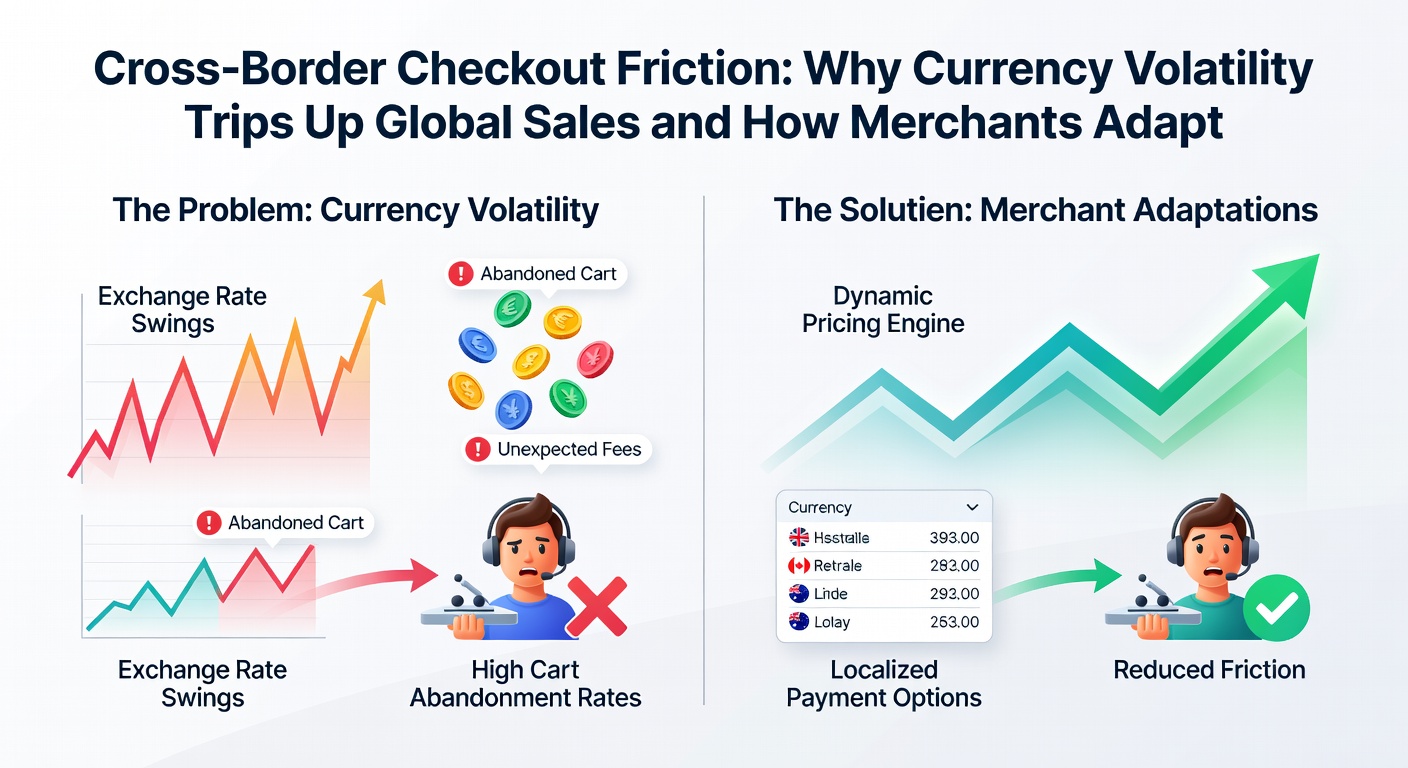
Merchants adapt through tech and strategy, starting with multi-currency displays that lock in rates at cart addition; platforms like Adyen enable this, showing prices in shoppers' local currency from the outset, which Baymard tests confirm slashes abandonment by 30%. So, a U.S. site selling to Europe might preview €45 alongside $50, using real-time feeds that buffer minor volatility without shocking users.
Dynamic pricing tools take it further, adjusting base costs algorithmically to hedge swings; data from BigCommerce users reveals 15% sales lifts after implementation, as algorithms predict volatility via machine learning models fed by central bank APIs. But that's not all: forward contracts and options from fintechs like Currencycloud allow locking rates for 30-90 days, smoothing outflows even as markets churn.
Proven Tactics in Action
Consider one apparel brand expanding into Africa; facing naira volatility, they integrated price freezing at checkout, holding the quoted rate for 15 minutes, which boosted conversions 28% per their case study. Another tactic, transparent fee breakdowns, lists conversion spreads upfront (say, 1.5% via Visa), building trust and cutting disputes by 40%, according to processor reports.
And for high-ticket items like electronics, installment plans in local currencies via partners like Klarna neutralize volatility entirely, spreading payments over months at fixed local rates; Klarna's 2026 metrics show 35% uptake in volatile markets, driving repeat business.
Those who've rolled out AI-driven previews often find they forecast totals accurately 95% of the time, using historical data to alert on potential spikes and suggest alternatives like cheaper shipping to offset rises.
Case Studies: Lessons from the Trenches
Take a European fashion retailer venturing into Latin America; peso swings in 2025 wiped 20% off projected sales until they adopted PayPal's multi-currency settlement, which stabilized receipts and lifted revenue 42% year-over-year. Turns out, the key was partnering with processors offering zero-fee conversions for high-volume merchants, turning a liability into a moat.
In Asia, an electronics exporter faced yen appreciation headwinds; by embedding Stripe's dynamic conversion with volatility alerts, they reduced drop-offs from 75% to 52%, while hedging 50% of exposure via FX forwards, preserving margins amid April 2026 turmoil. Experts who've studied these shifts emphasize localization beyond currency, pairing it with region-specific payment methods like Pix in Brazil to compound gains.
One software firm targeting Australia integrated Afterpay alongside currency locking; AUD volatility tested them, but adaptations yielded 19% growth in cross-border subscriptions, proving bundled tactics outperform siloed fixes.
Looking Ahead: Trends Shaping 2026 and Beyond
By mid-2026, blockchain-based stablecoins emerge as a friction-killer; platforms like Stripe test USDC settlements that bypass volatility entirely, promising 50% faster checkouts with pegged values. Regulators from the U.S. Treasury to Australia's ASIC greenlight these, fostering adoption while central bank digital currencies (CBDCs) loom, potentially standardizing cross-border rails by 2028.
AI advancements predict volatility 72 hours ahead with 88% accuracy per recent MIT studies, enabling proactive pricing; merchants ignoring this risk widening gaps, as data predicts 25% of global e-commerce flowing through adapted channels by 2027.
Conclusion
Currency volatility undeniably trips up cross-border sales, inflating abandonment and eroding trust through unpredictable checkout totals, yet merchants counter effectively with multi-currency tools, hedging, and transparent previews that reclaim lost revenue. Data underscores the payoff: adapted platforms see 20-40% conversion boosts, even in turbulent times like April 2026's rate shocks. As global trade expands, those prioritizing frictionless flows position themselves to capture the trillion-dollar prize, turning volatility from foe to navigable challenge.