Currency Conversion Layers Shaping Settlement Predictability for Subscription Vendors Managing Cross-Region Mobile Transfers
Quinn Schmidt · Aug 18, 2026
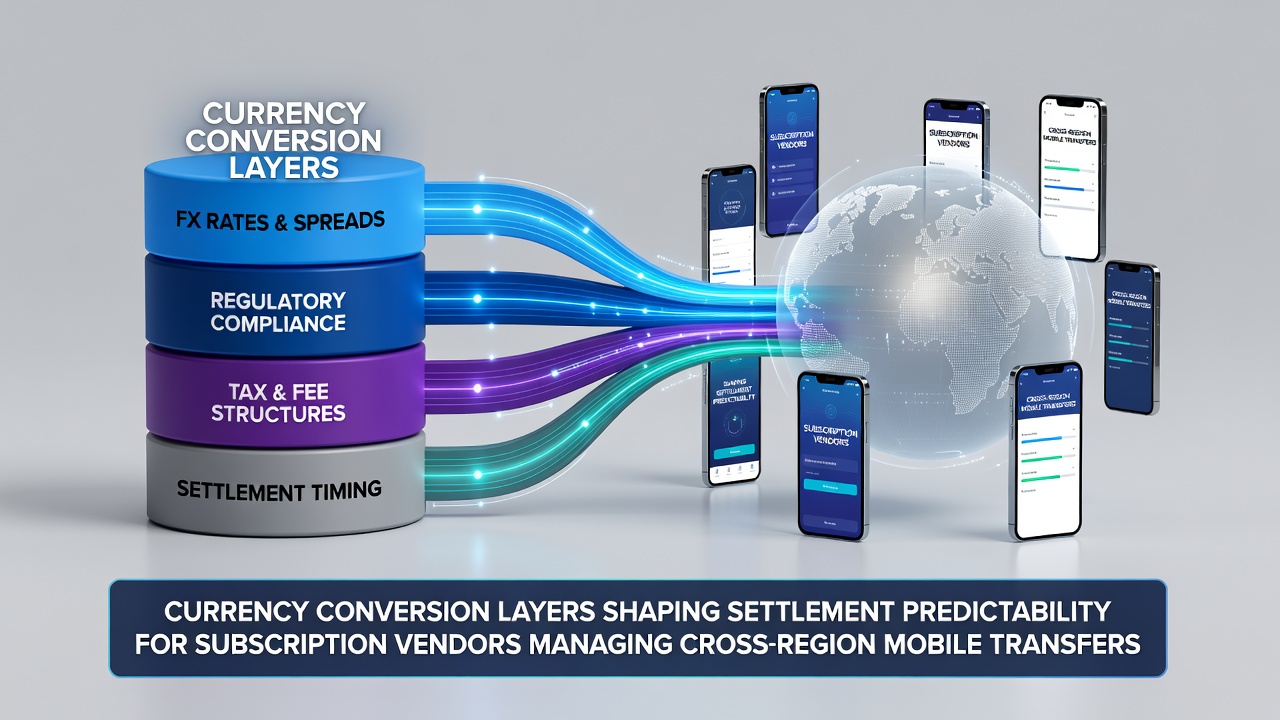
Currency Conversion Layers Shaping Settlement Predictability for Subscription Vendors Managing Cross-Region Mobile Transfers
Subscription vendors handling mobile transfers across regions encounter multiple currency conversion layers that include payment processors, foreign exchange providers, acquiring banks, and settlement networks, each applying distinct rates and timing rules. These layers accumulate spreads and delays that directly influence when funds reach vendor accounts and how predictable those arrivals become. Data from the Bank for International Settlements shows cross-border payment volumes reached record levels in 2025, with subscription models contributing a growing share in markets from Europe to Asia-Pacific.
Mechanics of Layered Conversions
Vendors initiate a mobile subscription renewal in one currency while the end user pays in another, triggering an initial conversion at the processor level followed by further exchanges at the acquirer and clearing house stages. Each step applies a markup that compounds across the chain, and timing differences arise because processors often batch settlements daily whereas clearing houses operate on regional calendars. Researchers at the European Central Bank have documented how these staggered processes create variance in final receipt dates, particularly when weekends or holidays separate the regions involved.
August 2026 brought additional clarity to these patterns as several major acquirers released updated reporting dashboards that timestamp each conversion layer separately. Vendors using these tools now track the exact moment a euro-denominated renewal converts to USD at the processor, then again at the settlement bank, revealing average spreads of 1.2 to 2.8 percent depending on corridor volume. The added granularity helps teams forecast cash positions with greater accuracy than earlier aggregated reports allowed.
Effects on Predictability
Settlement predictability suffers when conversion layers operate independently because a delay at any single point shifts the entire downstream schedule. One study from the Reserve Bank of Australia examined subscription vendors managing transfers between Southeast Asia and Oceania and found that FX volatility combined with batch timing produced settlement windows ranging from two to seven business days for the same corridor. Vendors relying on fixed monthly forecasts therefore face variance that affects inventory planning and tax provisioning.
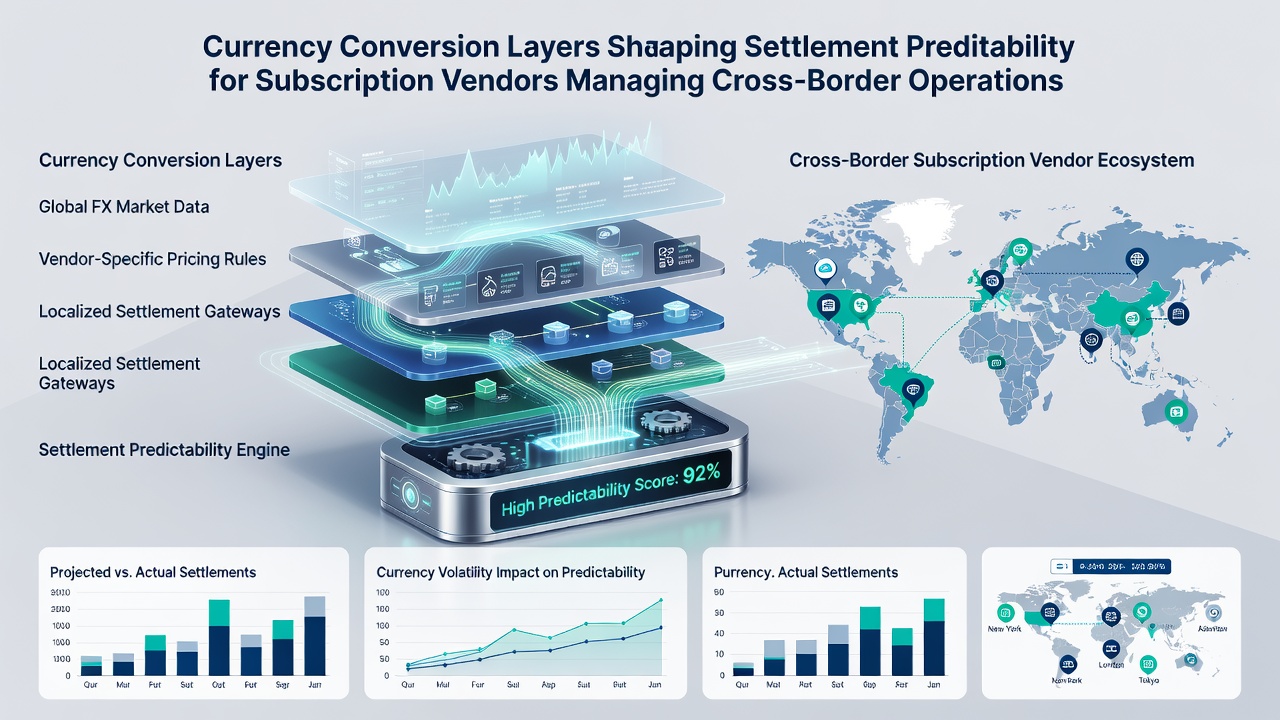
Multi-currency subscription platforms mitigate some uncertainty by routing through specialized FX aggregators that lock rates at authorization rather than at settlement. Observers note this approach reduces exposure to intraday swings, yet it still leaves vendors subject to the final clearing house cut-off times that differ by jurisdiction. Canadian payment data from 2025 indicated that platforms adopting early rate locking improved settlement date accuracy by 34 percent compared with those using spot conversions at batch close.
Operational Adjustments by Vendors
Subscription vendors adapt by maintaining buffer accounts denominated in key settlement currencies and by negotiating service-level agreements that specify conversion deadlines. These agreements often require processors to disclose exact cut-off times for each layer, allowing finance teams to model worst-case delays. Data indicates that vendors who consolidated acquisitions through fewer banking partners reduced the number of conversion events per transaction, thereby trimming both cost and timing variance.
Regulatory frameworks in the European Union and Australia now require greater transparency on FX margins applied to consumer payments, which indirectly benefits vendors by standardizing disclosure formats across processors. Teams that integrate these disclosures into their reconciliation systems gain earlier visibility into expected settlement amounts, reducing the need for manual adjustments after funds arrive.
Conclusion
Currency conversion layers continue to define the boundaries of settlement predictability for subscription vendors operating across mobile regions, with each additional layer introducing measurable spreads and timing offsets. As reporting tools evolve and regulatory disclosures standardize, vendors gain clearer sightlines into the full chain, enabling tighter cash-flow models without altering the underlying payment flows themselves. The patterns observed through mid-2026 suggest ongoing refinement rather than wholesale replacement of existing layer structures.