23 Jun 2026
Dashboard Analytics Tools Unifying Merchant Accounts with Payment Gateways for Real-Time Fraud Prevention in Global Mobile Transactions
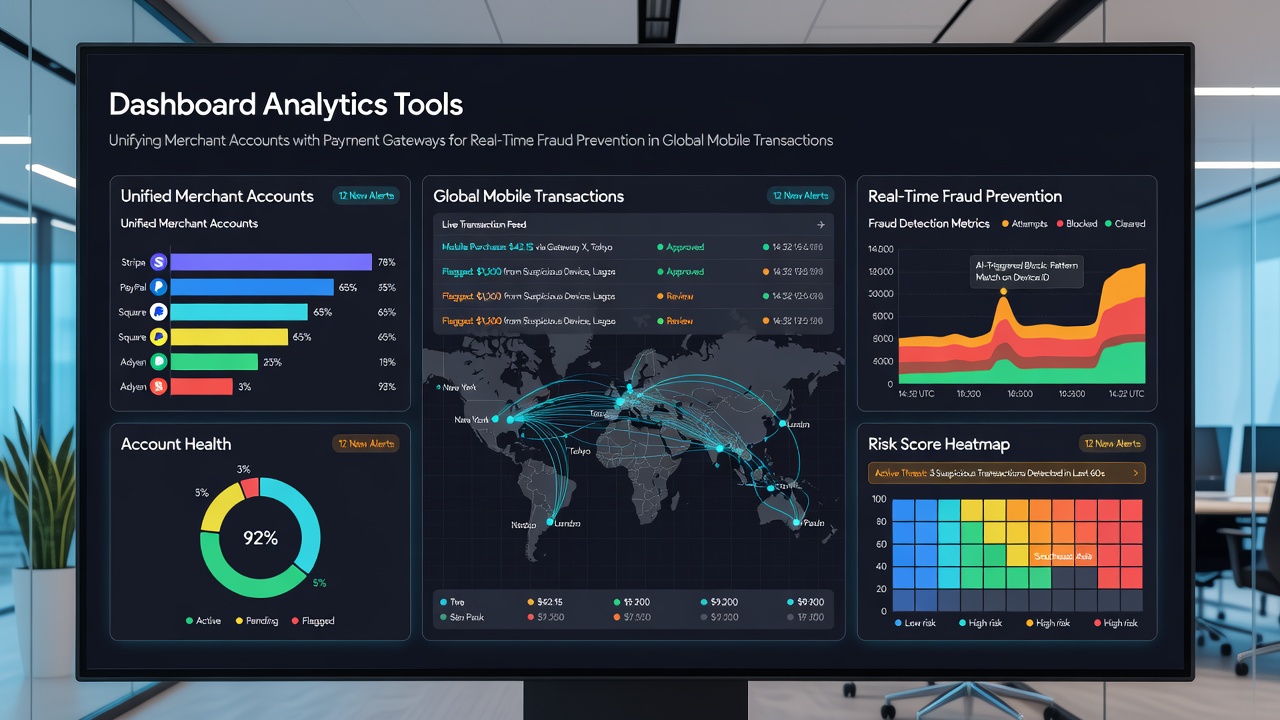
Merchants handling global mobile transactions increasingly rely on dashboard analytics tools that connect merchant accounts directly to payment gateways, and these platforms deliver continuous monitoring of transaction patterns across borders. Data from such systems reveals patterns in authorization rates, device fingerprints, and velocity checks that help identify anomalies before settlement occurs. Observers note that unification reduces the lag between data collection and response, which matters when mobile users complete purchases from multiple regions in a single session.
Core Components of Unified Dashboard Systems
These tools pull transaction logs from merchant accounts while simultaneously accessing gateway APIs for authorization details, and they consolidate everything into a single interface that flags discrepancies in real time. Researchers at institutions studying payment ecosystems have documented how fields like IP geolocation, currency conversion rates, and recurring billing identifiers feed into scoring models that update with each incoming request. In June 2026, several platforms introduced enhanced modules that incorporate machine learning outputs from prior months, allowing dashboards to adjust thresholds based on seasonal mobile traffic spikes in emerging markets.
Payment gateways supply raw data on declined attempts and chargeback codes, while merchant accounts contribute customer history and inventory-linked details, and the combined dataset supports queries that surface coordinated fraud attempts across seemingly unrelated accounts. Those who've implemented these connections report faster isolation of mule accounts used in test transactions, although exact performance metrics vary by transaction volume and regional compliance requirements.
Real-Time Fraud Signals in Mobile Environments
Mobile transactions introduce variables such as app version, operating system updates, and carrier network changes that dashboards now track alongside traditional indicators like card verification values. When a gateway processes a request from a device that recently appeared in multiple merchant accounts, the unified analytics layer can trigger step-up authentication or temporary holds before funds move. Figures from industry reports show that such integrated monitoring correlates with lower rates of account takeover in high-frequency mobile segments, particularly where cross-border remittances intersect with e-commerce flows.
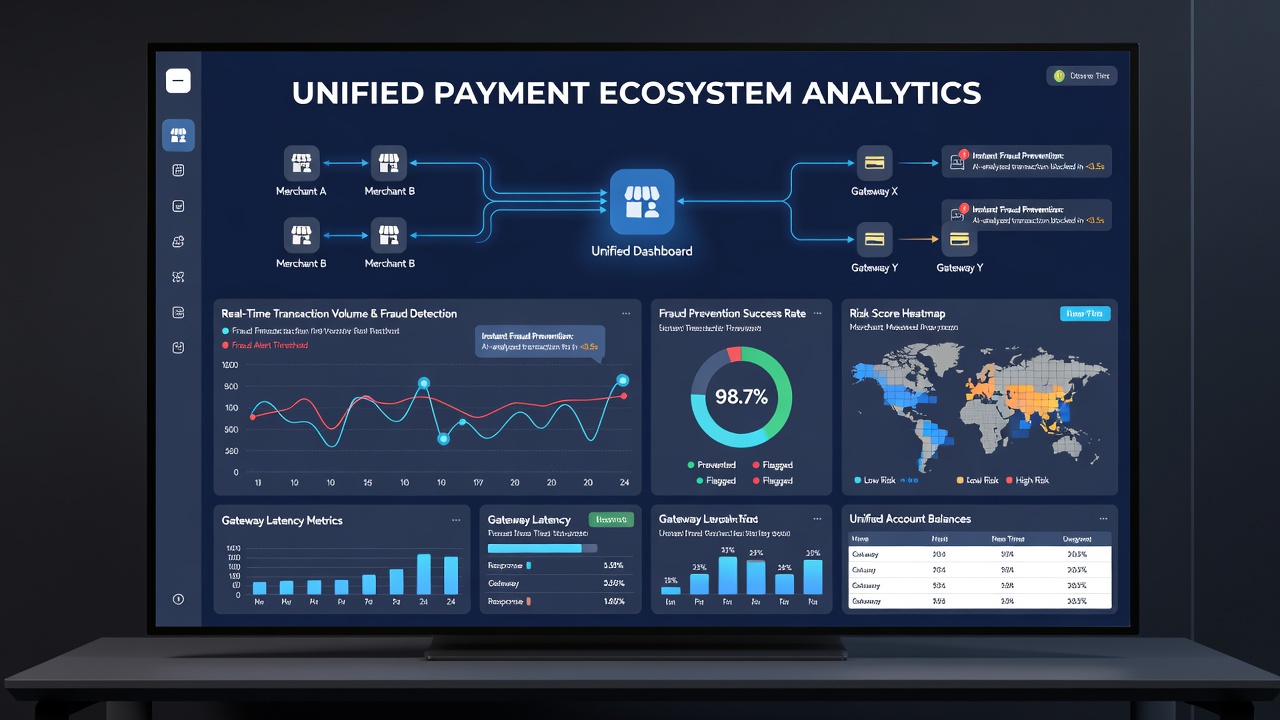
Experts tracking these developments point to the role of standardized data schemas that let dashboards map gateway responses to merchant-specific risk rules without manual reconciliation. One case involved a retailer operating in Southeast Asia and Latin America, where the system detected a cluster of small-value tests followed by larger attempts within minutes, prompting an automated gateway-level block that prevented further exposure. The approach relies on continuous API handshakes rather than batch uploads, which keeps latency low enough for mobile checkout flows that users expect to complete in under thirty seconds.
Regulatory and Technical Considerations Across Regions
Compliance frameworks in different jurisdictions influence how these unified tools handle data residency and sharing between merchant accounts and gateways. The Federal Trade Commission has outlined expectations around consumer data protection in payment processing, while similar guidance from bodies in the Asia-Pacific region emphasizes audit trails that dashboards must preserve for post-incident review. Integration projects therefore incorporate configurable retention settings that align with the strictest applicable rules without fragmenting the analytics view.
Technical standards from organizations such as the PCI Security Standards Council require encryption and access controls that extend to the dashboard layer itself. When merchant accounts and gateways exchange data through these platforms, tokenization of sensitive elements remains essential, and logs capture every query that touches fraud scoring engines. Observers have noted that successful deployments often begin with pilot connections limited to one gateway and a subset of merchant accounts before scaling to full global coverage.
Operational Workflows and Data Flows
Daily operations involve scheduled data refreshes that overlay historical trends onto live streams, enabling analysts to compare current mobile transaction clusters against baselines established in prior quarters. Dashboards surface alerts through customizable channels, including API pushes to operations teams or direct notifications within gateway admin consoles. This setup supports scenarios where a single fraudulent pattern appears across multiple currencies, because the unified view normalizes amounts and timestamps automatically.
Those managing high-volume mobile platforms describe processes where flagged transactions route to review queues while clean ones proceed to settlement, and the system logs outcomes to refine future scoring. In environments with frequent regulatory updates, the dashboards include versioned rule sets that merchants can toggle based on the markets they serve at any given time.
Conclusion
Unified dashboard analytics continue to evolve as merchant accounts and payment gateways exchange richer datasets for mobile fraud prevention. The ability to correlate signals across borders in real time depends on stable API connections and consistent data standards that accommodate regional differences. As transaction volumes grow through 2026 and beyond, the focus remains on maintaining low-latency integration while meeting compliance obligations in every operating jurisdiction.