14 Jul 2026
Encryption Standards Impacting Transaction Success Rates in Mobile Payment Gateways for Worldwide E-commerce
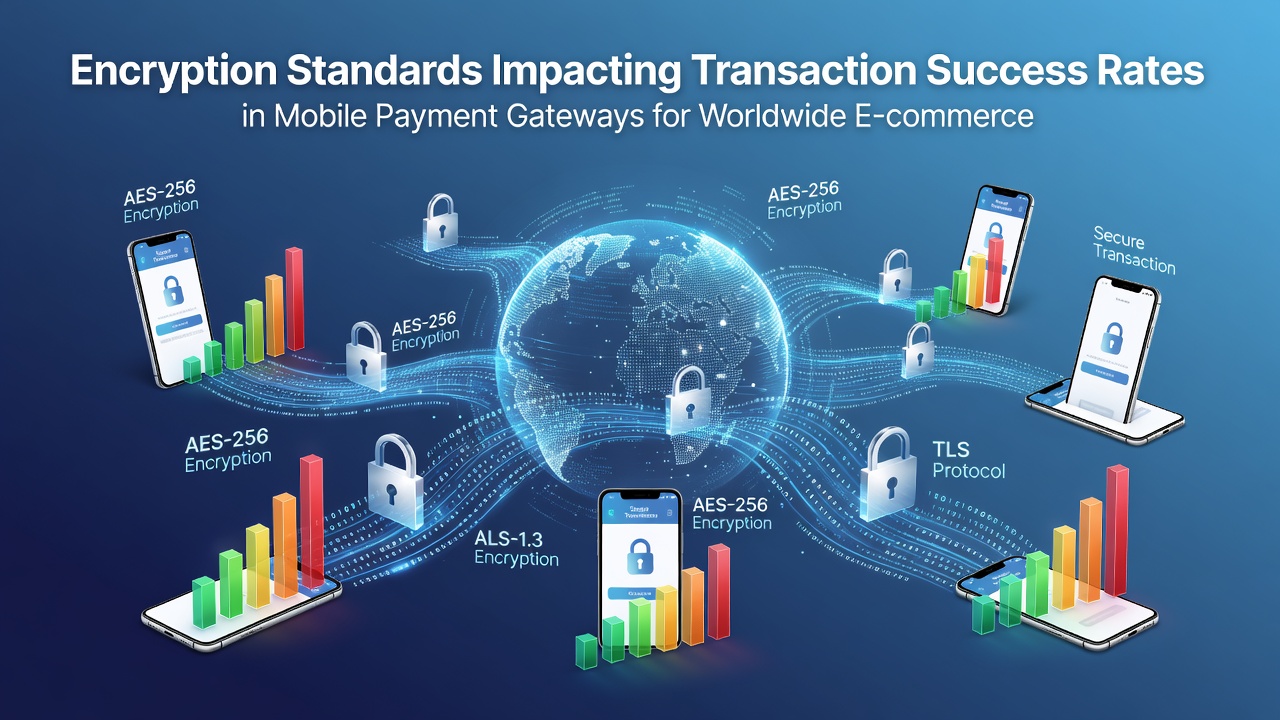
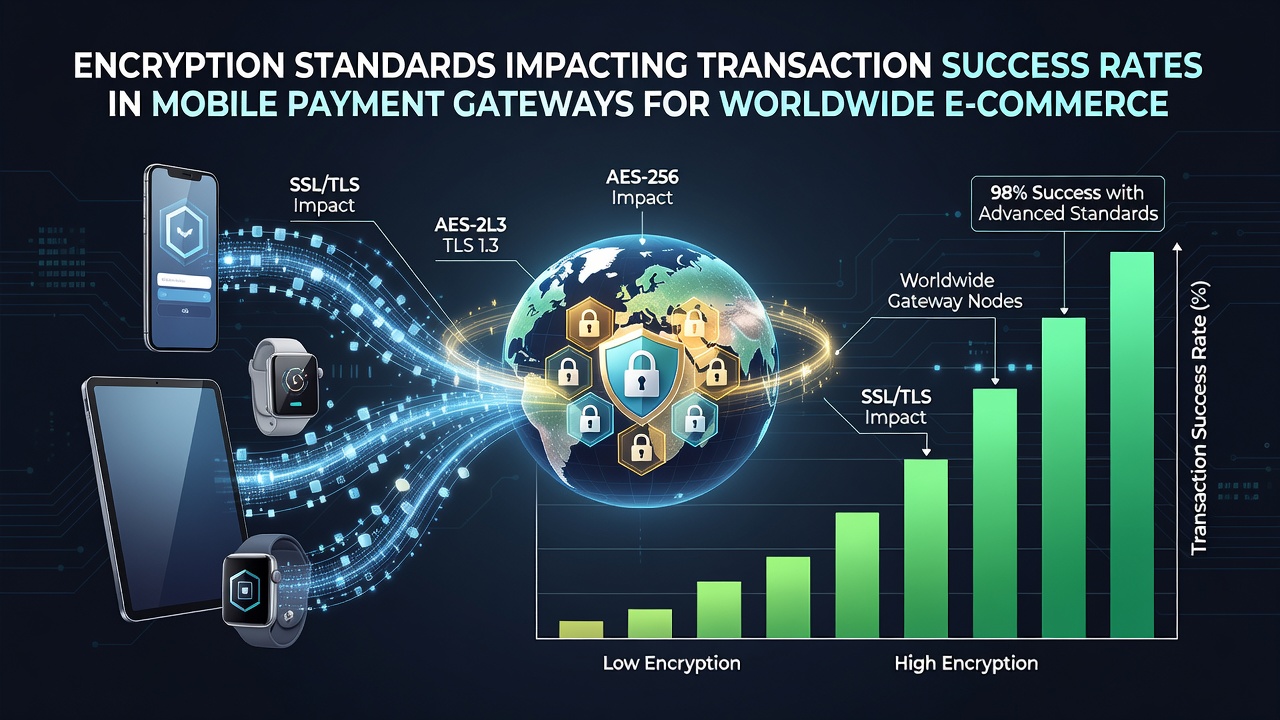
Encryption standards shape how mobile payment gateways process transactions across global e-commerce platforms, and data from multiple regions shows direct links between protocol choices and approval outcomes. Merchants operating in July 2026 face evolving requirements as networks adopt newer specifications while older ones linger in certain markets. Studies indicate that gateways using TLS 1.3 combined with AES-256 encryption often record higher completion rates than those relying on legacy TLS 1.2 configurations, particularly when latency stays below thresholds that trigger automatic declines.
Core Encryption Protocols and Their Technical Footprint
Payment processors implement standards set by organizations such as the National Institute of Standards adn Technology in the United States and the European Telecommunications Standards Institute, and these choices affect handshake times, key exchange efficiency, and overall session stability. Gateways that enforce forward secrecy through ephemeral keys reduce exposure windows yet add computational steps that mobile networks in regions with variable signal strength sometimes struggle to complete before timeouts occur. Research from the Bank for International Settlements highlights that transaction success improves when gateways balance encryption strength against round-trip latency, especially during peak hours when mobile data congestion rises.
Regional Adoption Patterns and Measured Outcomes
Asia-Pacific markets demonstrate faster migration to TLS 1.3 than parts of Latin America, where legacy systems still handle a notable share of mobile traffic, and figures from the Reserve Bank of Australia reveal that platforms upgrading encryption layers saw approval rates climb by measurable margins once network optimizations accompanied the changes. In contrast, European gateways operating under PSD2 rules must maintain strong customer authentication alongside encryption, which creates additional data packets that occasionally lower success percentages if mobile carriers apply strict packet inspection. Observers note that African and Middle Eastern corridors show mixed results because some gateways combine newer encryption with older certificate chains, producing intermittent handshake failures that merchants trace directly to protocol mismatches.
Latency, Compliance, and Approval Correlations
Transaction success rates depend on how quickly a gateway completes encrypted handshakes before acquiring banks issue declines for suspected timeouts, and metrics collected by the Monetary Authority of Singapore indicate that reducing handshake duration below 300 milliseconds correlates with fewer abandoned carts in cross-border mobile purchases. Compliance with PCI DSS encryption mandates forces gateways to rotate keys at defined intervals, which adds processing overhead yet simultaneously lowers fraud-related chargebacks that otherwise erode overall success statistics. One analysis of 2025-2026 data found that gateways applying post-quantum resistant algorithms early experienced temporary dips in completion rates until hardware acceleration became widespread, after which rates stabilized above prior baselines.
Gateway Architecture Choices and Mobile-Specific Constraints
Mobile payment gateways must accommodate device diversity ranging from flagship smartphones with dedicated cryptographic hardware to feature phones using software-based implementations, and these differences produce measurable variances in success rates when encryption standards demand intensive calculations. Researchers tracking performance across multiple carriers discovered that gateways deploying hybrid encryption models, which fall back to lighter ciphers on weaker connections, maintain steadier approval percentages than rigid configurations that reject any session not meeting the highest standard. Data from the Canadian Bankers Association shows that partnerships between gateway providers and mobile network operators allow pre-negotiation of cipher suites, cutting negotiation time and lifting completion rates for transactions originating from regions with patchy 4G or emerging 5G coverage.
Future Shifts Expected Through 2026 and Beyond
Standards bodies continue evaluating quantum-resistant algorithms for integration into payment flows, and early test deployments scheduled for late 2026 already demonstrate that gateways can maintain current success levels when they stage rollouts alongside infrastructure upgrades. Merchants monitoring these developments track how certificate authorities update their root stores, since mismatches between client devices and gateway expectations still cause preventable declines in worldwide traffic. Industry reports compiled by academic groups at institutions such as the University of Tokyo indicate that phased adoption strategies, rather than abrupt switches, preserve transaction volumes while encryption strength increases.
Conclusion
Encryption standards continue to influence mobile payment gateway performance through their effects on latency, compliance overhead, and regional infrastructure compatibility. Gateways that align protocol choices with local network realities sustain higher success rates across worldwide e-commerce channels, and ongoing transitions scheduled through 2026 will require merchants to monitor both security mandates and operational metrics to keep approval percentages stable.