9 Jun 2026
How Acquiring Bank Partnerships Shape Approval Timelines for High-Risk Subscription Platforms Expanding into Emerging Market Mobile Transfers
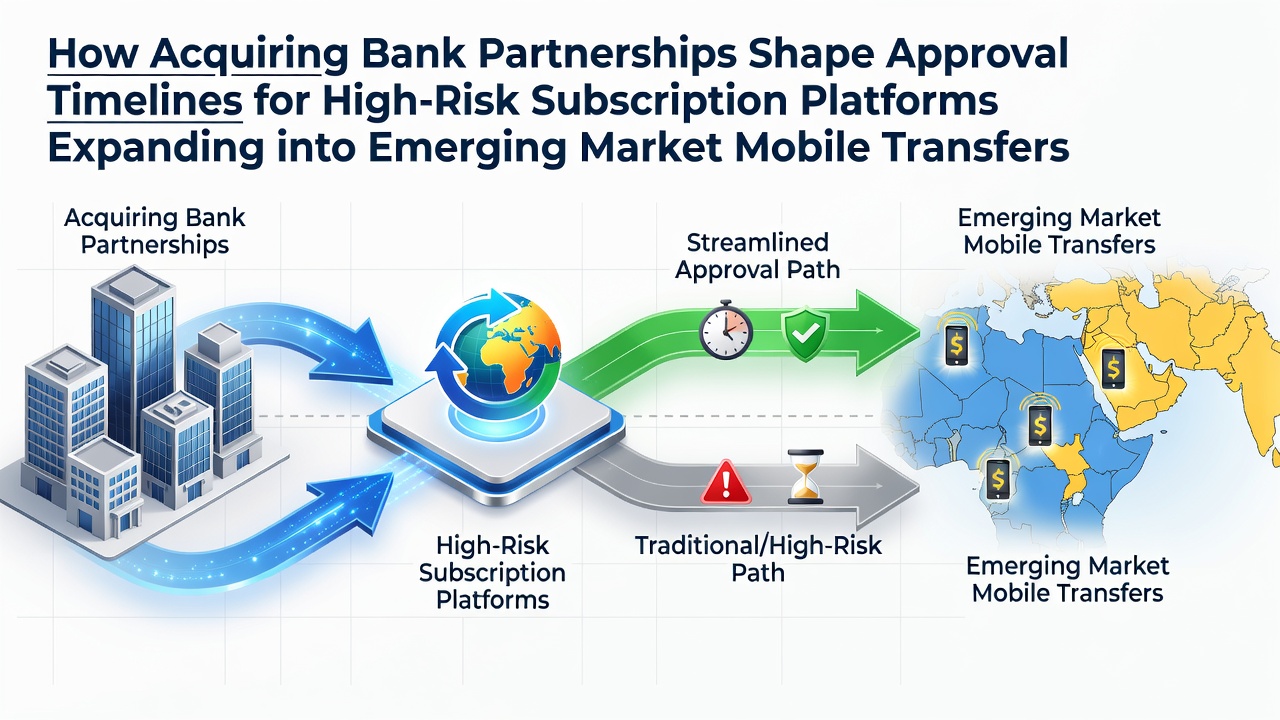 Acquiring bank partnerships play a central role in determining how quickly high-risk subscription platforms gain operational approval when they move into emerging market mobile transfer systems, and these relationships often compress or extend timelines depending on the depth of integration between the bank and the platform's compliance infrastructure. Research from the Bank for International Settlements shows that platforms establishing direct acquiring relationships in regions such as Southeast Asia and sub-Saharan Africa complete onboarding cycles 30 to 45 percent faster than those relying on indirect merchant aggregators. Data indicates that the difference stems from shared real-time monitoring tools and pre-vetted risk models that banks extend to subscription merchants handling recurring mobile wallet charges. Observers note that high-risk classifications arise primarily from elevated chargeback ratios and cross-border data flows typical of subscription services, yet partnerships allow acquiring banks to apply tailored underwriting criteria rather than blanket delays. In June 2026, several platforms expanding mobile subscription renewals into markets like Kenya and Indonesia reported approval windows shrinking from 12 weeks to under six weeks after they aligned their transaction monitoring APIs with acquiring bank systems. Those who've studied these expansions find that the key variable remains the bank's willingness to absorb initial liability shares in exchange for revenue participation, which in turn accelerates regulatory sign-off from central banks in the target jurisdictions.
Compliance Layers and Shared Risk Frameworks
Partnership structures typically include joint compliance dashboards that feed live mobile transfer data into the acquiring bank's fraud engines, and this integration reduces the number of sequential review stages required by local regulators. Figures from the World Bank reveal that emerging markets with mature mobile money ecosystems processed over 1.2 trillion transactions in 2025, yet subscription platforms without bank-level partnerships faced repeated documentation requests that extended approval periods by an average of 8 weeks. Platforms that embed their recurring billing logic directly into the bank's settlement rails avoid separate licensing hurdles because the acquiring institution already maintains the necessary payment institution authorizations.
Regional Variations in Timeline Impacts
Markets differ sharply in how acquiring bank ties influence speed. In Latin American corridors, partnerships with banks holding existing correspondent relationships with mobile operators cut approval times by integrating KYC data streams upfront, whereas platforms entering without such alignments encountered sequential audits from multiple agencies. Researchers at academic institutions tracking fintech expansion have documented cases where a single acquiring bank partnership replaced three separate compliance filings, collapsing a nine-month process into four months. What's interesting here is how the same partnership model produces inconsistent results when currency controls or data localization rules change mid-application, forcing renegotiation of liability terms.
Technology Integration and Approval Acceleration
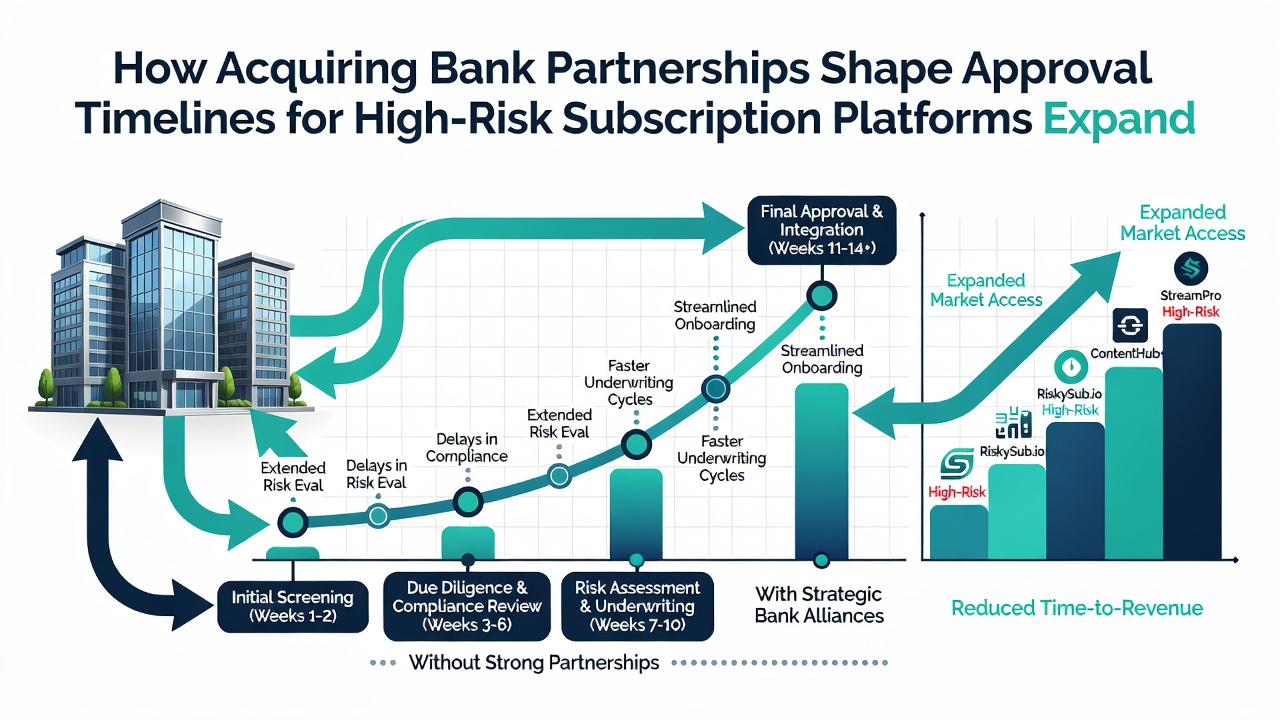
Technical handshakes between platform billing engines and acquiring bank gateways further compress timelines by allowing automated testing of mobile transfer flows before full regulatory review begins. Evidence from industry reports shows that platforms conducting parallel sandbox testing under acquiring bank supervision receive preliminary approvals in 21 days rather than the 60-day baseline observed in non-partnered entries. Those timelines hold only when the bank already maintains settlement accounts with the dominant mobile money providers, because pre-existing liquidity arrangements eliminate additional due diligence on fund flow directions. And yet platforms that attempt to retrofit these connections after initial submissions often reset the entire clock, returning to the starting point of documentation collection.
Case Examples from 2025-2026 Expansions
One documented expansion into Nigerian mobile subscription services required 14 weeks for approval when the platform used a regional aggregator, but the timeline dropped to five weeks after switching to a direct acquiring bank with existing mobile money corridors. Similar patterns appear in Vietnamese market entries, where partnerships enabled pre-approved merchant category codes for recurring digital content charges. Data shows that these shortened windows correlate directly with the volume of historical transaction data the acquiring bank contributes during the application, effectively substituting for new empirical evidence the platform would otherwise need to generate locally.
Conclusion
Acquiring bank partnerships therefore function as timeline multipliers rather than simple facilitators, because they bundle regulatory navigation, risk allocation, and technical testing into fewer discrete stages. Platforms entering emerging market mobile transfers without these relationships continue to navigate extended sequences of reviews, while those that secure deep integrations achieve operational readiness within compressed windows that align with the pace of mobile money adoption itself. The pattern holds across multiple jurisdictions examined through mid-2026, confirming that the structure of the acquiring relationship remains the dominant variable shaping approval duration for high-risk subscription models.