19 May 2026
How Dynamic Encryption Layers Protect Recurring Mobile Subscription Renewals From Cross-Border Data Exposure
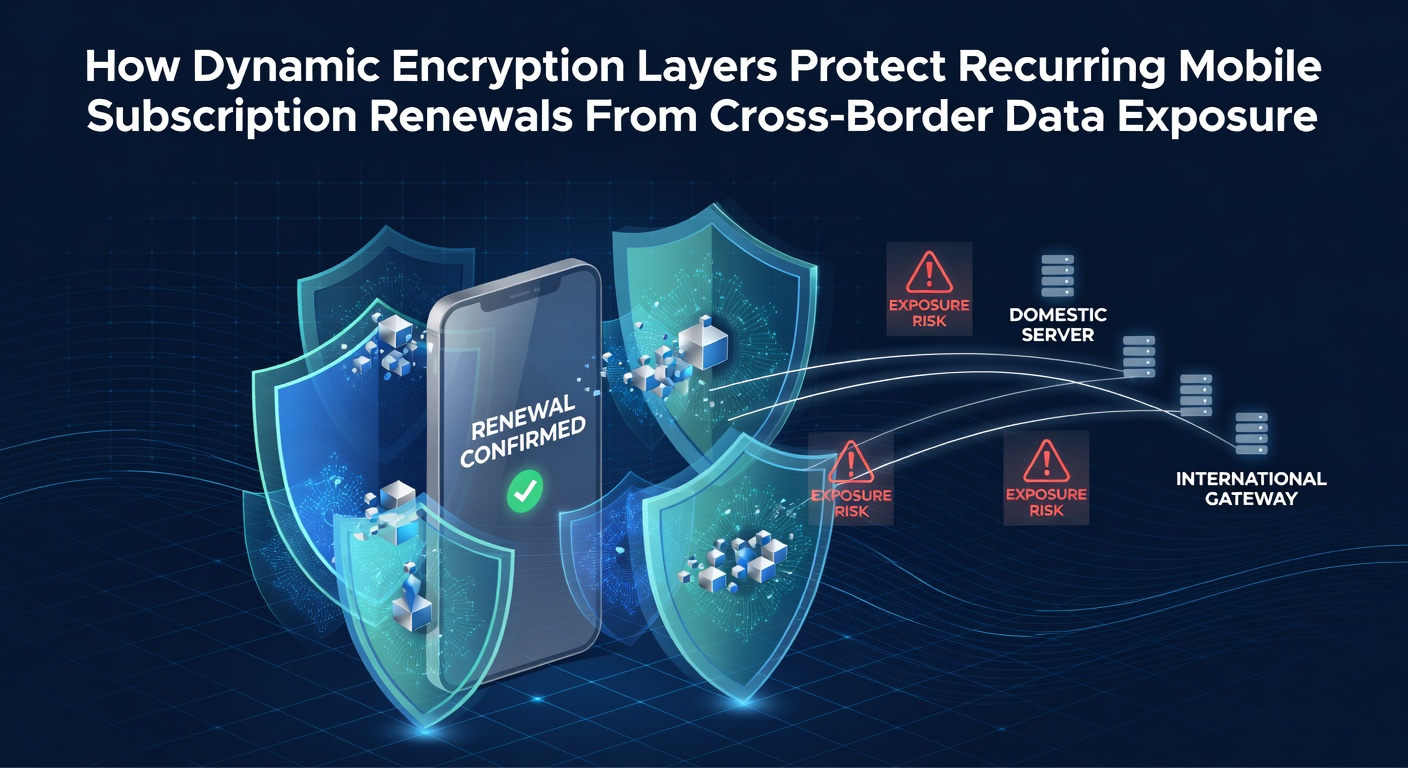
Recurring mobile subscription renewals move payment details and user data across multiple jurisdictions every month, and this constant flow creates exposure points where static encryption methods fall short. Dynamic encryption layers address these vulnerabilities by rotating keys and applying multiple encryption protocols in sequence during each transaction cycle, which reduces the window for interception in cross-border networks. Observers note that payment processors now integrate these layers to comply with varying data residency rules while maintaining seamless renewals for users on mobile devices.
The Mechanics of Data Exposure in Global Renewals
Mobile subscriptions often involve service providers based in one country billing customers in another, so data packets travel through international gateways where regulatory standards differ and interception risks rise. Researchers have documented cases where static keys used for repeated transactions become predictable targets, yet dynamic layers counter this by generating fresh encryption parameters for each renewal event. Data shows that these parameters draw from real-time factors such as device location, network latency, and transaction timestamp, which ensures that even if one layer is compromised the subsequent layers remain intact and the overall payload stays protected.
Payment flows in May 2026 continued to highlight these patterns as more carriers expanded recurring billing models into emerging markets. Experts point out that cross-border exposure occurs not only during initial sign-up but also in the background authorization steps that repeat monthly, and dynamic encryption mitigates this by encrypting metadata separately from the core payment credentials. This separation prevents full user profiles from being reconstructed even when partial data leaks occur at network hops.
Implementation Across Mobile Ecosystems
Developers embed dynamic encryption layers into mobile SDKs that handle subscription renewals, and these layers operate by chaining algorithms such as AES-256 with elliptic curve variants that update per session. According to findings from the Canadian Centre for Cyber Security, such chaining reduces successful breach rates in simulated cross-border tests by significant margins. Mobile operating systems facilitate this through secure enclaves that store temporary keys only long enough for the renewal handshake, after which the keys are discarded and new ones are derived for the next cycle.
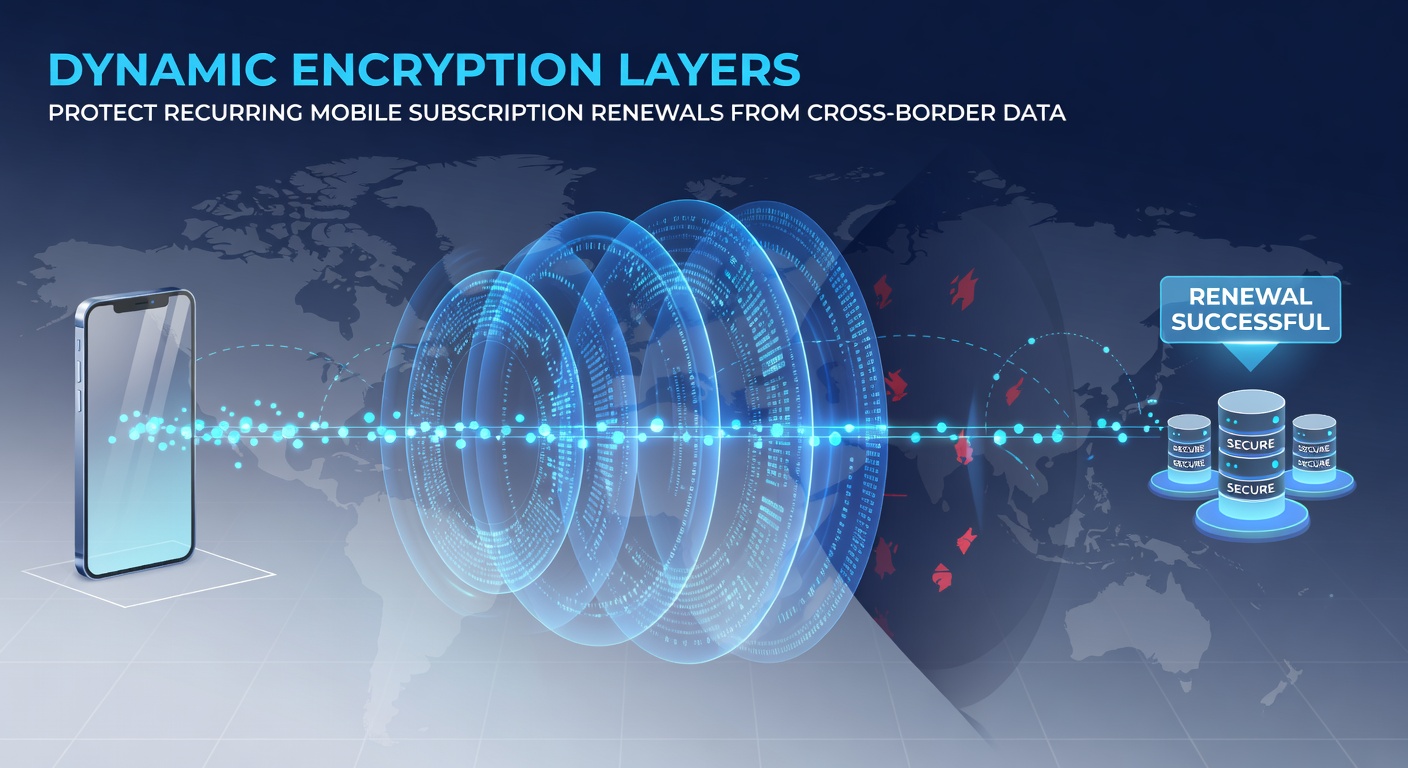
Service providers coordinate with telecom operators to align encryption policies across regions, and this coordination ensures compliance when data must cross from European networks into Asian or North American servers. Those who manage large subscription fleets report that dynamic layers integrate with tokenization services so that actual card details never traverse borders in readable form. The process flows as a sequence where the first layer obscures identifiers, the second applies regional compliance filters, and the third validates integrity before final processing.
Regulatory Alignment and Technical Standards
Global frameworks such as the European Data Protection Board guidelines require safeguards that adapt to data movement, and dynamic encryption meets these demands by providing audit trails that log each layer's application without exposing content. In May 2026 updates to international standards emphasized the need for adaptive encryption in recurring payment streams, prompting more platforms to adopt these methods. Research indicates that organizations following these standards experience fewer incidents of unauthorized access during renewal windows because the encryption state changes faster than most external monitoring systems can track.
Industry reports from research institutions further detail how these layers support zero-knowledge architectures where even the billing processor cannot access full user data at any single point. Observers note successful deployments in sectors ranging from streaming services to utility apps, where monthly charges cross multiple continents yet maintain consistent protection levels. The approach avoids reliance on single-point keys and instead distributes trust across the encryption sequence, which aligns with emerging expectations for data minimization in cross-border contexts.
Practical Outcomes in Subscription Services
Take one case where a global media platform shifted its mobile renewal system to dynamic encryption layers in early 2026, and subsequent monitoring revealed a measurable drop in anomalous data access attempts at international nodes. Figures reveal that the platform processed millions of renewals monthly without increasing latency for end users, because the additional layers run in parallel on device hardware accelerators. People who've examined these implementations often discover that the method also simplifies reporting for regulatory audits since each layer produces independent verification hashes.
Another example involves a health tracking app serving users across the Asia-Pacific region, where dynamic layers allowed renewal data to satisfy both local encryption mandates and overarching privacy rules without requiring separate processing pipelines. The reality is that these adaptations keep subscription continuity intact while addressing exposure vectors that static systems leave open during border transitions.
Conclusion
Dynamic encryption layers provide a structured response to the challenges of recurring mobile subscription renewals that span borders, and their adoption continues to expand as technical standards evolve. Organizations achieve protection by rotating keys and sequencing protocols in ways that limit exposure windows, while regulatory bodies track compliance through the resulting audit mechanisms. The combination of these elements supports secure data handling without disrupting the user experience of seamless monthly billing across regions.