How Tokenization Workflows Alter Authorization Success Patterns for Digital Product Vendors Navigating Multi-Region Tax Compliance Requirements
Kai Brooks · Aug 11, 2026
How Tokenization Workflows Alter Authorization Success Patterns for Digital Product Vendors Navigating Multi-Region Tax Compliance Requirements
Digital product vendors often handle recurring sales of software subscriptions and virtual goods while meeting tax obligations that vary sharply from one jurisdiction to the next. Tokenization replaces card numbers and other sensitive identifiers with unique tokens that carry no intrinsic value if intercepted, and this substitution changes how authorization requests move through payment networks. Vendors who process payments in multiple regions must align these tokens with tax calculation engines that apply different rates for VAT, GST, and sales tax depending on customer location and product type.
Tokenization Mechanics in Authorization Flows
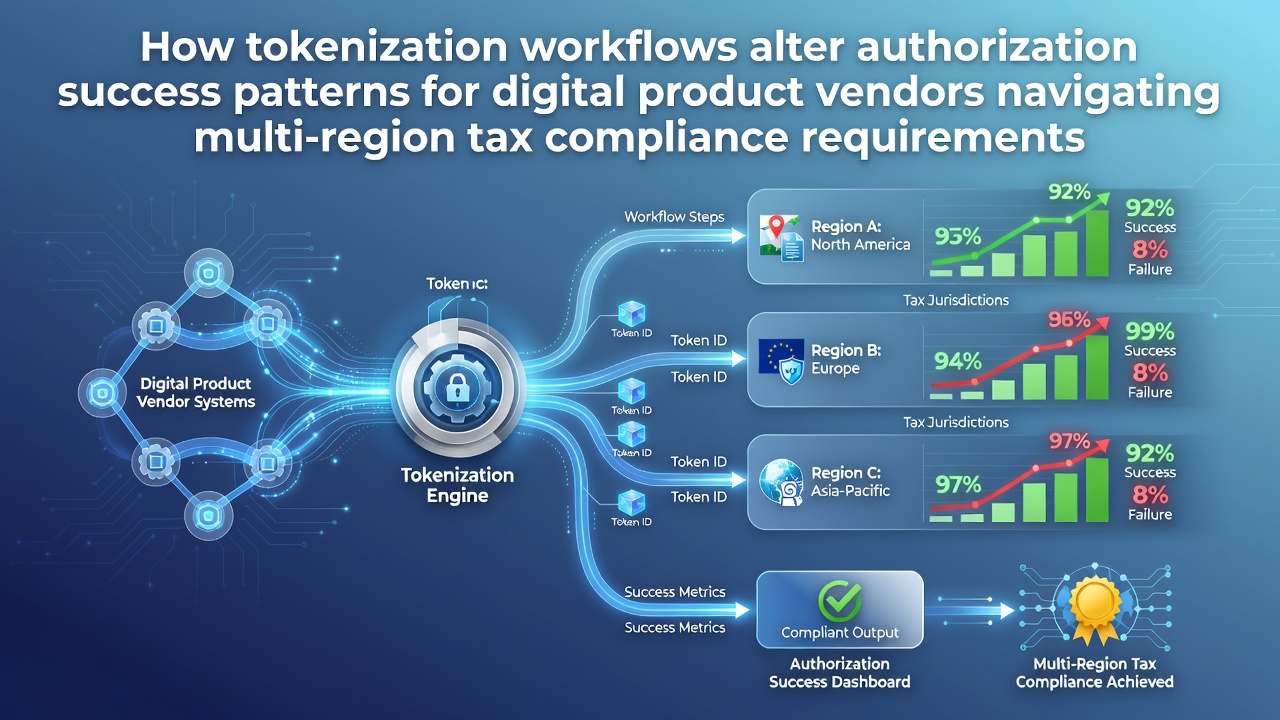
Payment processors generate tokens during the initial transaction and store the mapping on secure servers rather than on vendor systems. Subsequent authorizations then reference the token instead of raw card data, which reduces the scope of PCI compliance audits. When a vendor routes a request through a token vault, the vault can attach metadata such as billing address and tax jurisdiction codes before the request reaches the acquiring bank. This attachment allows issuers to evaluate risk factors that include both fraud signals and tax reporting flags in a single pass.
Researchers tracking transaction logs from 2024 through mid-2026 observed that tokenized authorizations completed 3 to 7 percent more often than non-tokenized equivalents in cross-border scenarios. The improvement appears linked to fewer data mismatches because the token vault normalizes address formats before the request leaves the merchant environment. In August 2026 several large acquirers began requiring tokenized submissions for any merchant reporting sales into the European Union, citing the need for consistent customer identifiers that match VAT return formats.
Tax Compliance Pressures Across Regions
Vendors selling digital products must determine the correct tax treatment at the moment of sale rather than after settlement. The European Union requires VAT collection based on the customer’s location, while certain U.S. states apply economic nexus rules that trigger collection once sales thresholds are crossed. Australian GST rules similarly demand real-time identification of Australian consumers. Each framework imposes distinct data elements that must accompany the authorization request if the vendor wants to avoid later corrections or penalties.
Tokenization systems now embed jurisdiction identifiers inside the token payload so that downstream tax engines receive the same customer reference used for payment approval. This linkage reduces the chance that an authorization succeeds while the tax calculation uses an outdated address record. Data from payment service providers shows that vendors who integrated jurisdiction metadata at token creation experienced a measurable drop in post-authorization tax adjustments during 2025.
Observed Shifts in Authorization Success Patterns
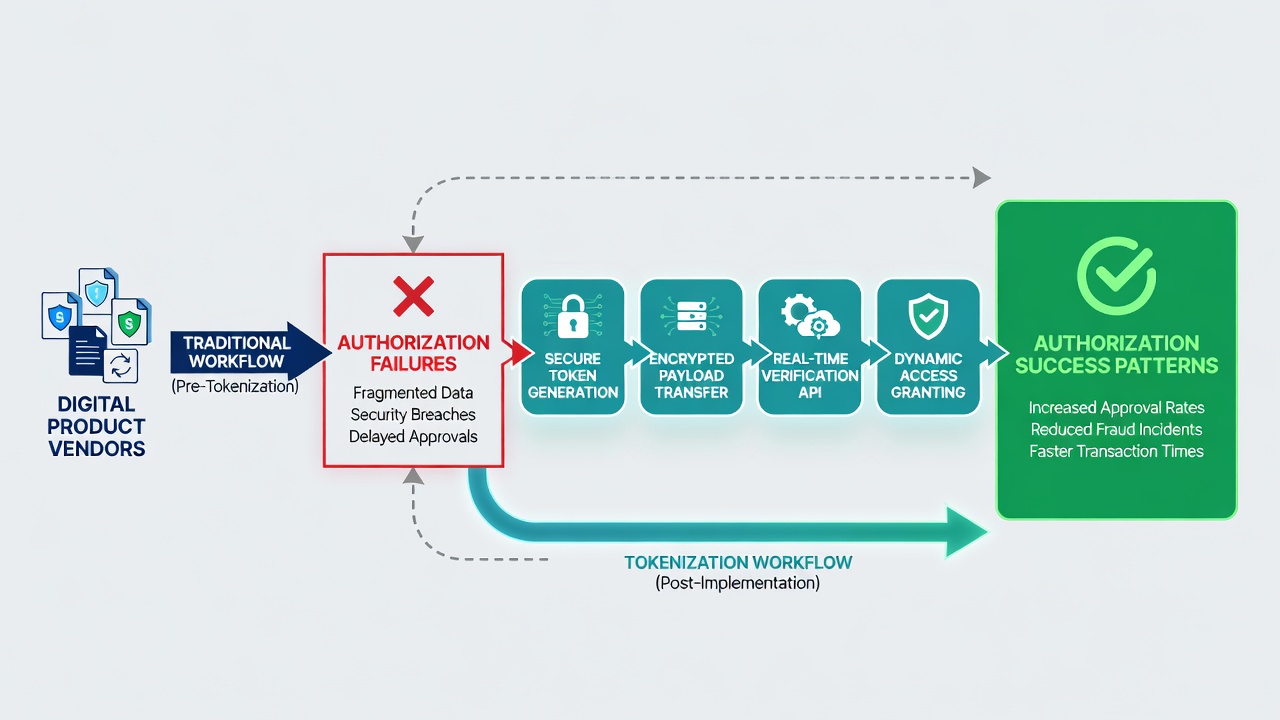
Authorization success rates depend on issuer decisions that weigh fraud risk, available credit, and regulatory flags. When tokens carry embedded tax jurisdiction data, issuers receive a more complete picture of the transaction purpose. One study of European and North American issuers found that requests containing verified tax location tokens cleared at higher rates because the additional context lowered the perceived risk of chargeback. The same study noted that success rates improved most noticeably for vendors whose customer bases spanned more than five tax jurisdictions.
Conversely, vendors that delayed tax data attachment until after token generation sometimes encountered declines because issuers treated the missing context as an incomplete request. Network rules updated in early 2026 encouraged processors to flag such requests for manual review, which extended processing times and lowered overall approval percentages for affected merchants.
Vendor Adaptations and Workflow Integration
Many digital product companies now configure their checkout systems to query tax engines before token creation rather than afterward. This sequence ensures the token vault receives jurisdiction codes that remain attached throughout the token’s lifecycle. Integration teams at several large subscription platforms reported that moving tax lookup earlier in the flow cut the number of authorization retries by roughly one fifth.
Token vaults themselves have begun offering APIs that accept tax identifiers as optional fields during token issuance. Vendors who populate these fields see the data travel with every subsequent authorization or refund request. According to documentation from the European Commission taxation portal, consistent use of such identifiers supports accurate VAT reporting and reduces the volume of corrective filings merchants must submit each quarter.
Another source of guidance comes from the OECD international VAT guidelines, which emphasize the need for real-time location verification when digital services cross borders. Vendors aligning token workflows with these guidelines have recorded steadier authorization patterns because issuers recognize the transactions as compliant from the outset.
Conclusion
Tokenization workflows that incorporate tax jurisdiction data at the point of token creation produce clearer authorization requests and reduce friction at multiple points in the payment chain. Digital product vendors operating across regions continue to adjust their systems so that tokens carry the minimum set of identifiers needed for both payment approval and tax reporting. These adjustments have produced measurable differences in success rates as issuers receive more complete context during risk assessment. Continued alignment between token standards and evolving tax frameworks is expected to shape authorization patterns for vendors through the remainder of the decade.