Settlement Timing Protocols Shaping Cash Flow Stability for Vendors Managing Multi-Currency Digital Goods Sales Through Acquirer Networks
Kai Brooks · Aug 4, 2026
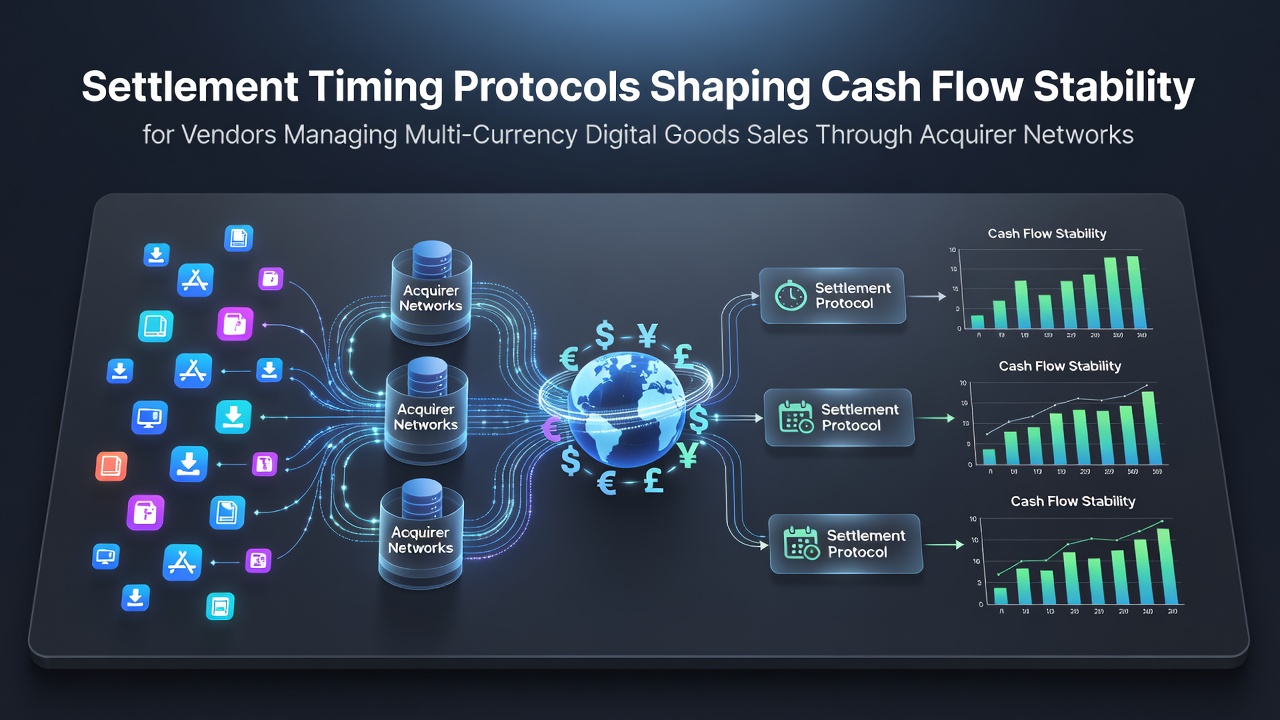
Settlement Timing Protocols Shaping Cash Flow Stability for Vendors Managing Multi-Currency Digital Goods Sales Through Acquirer Networks
Settlement timing protocols determine when funds from digital goods transactions reach vendor accounts after acquirer processing, and these mechanisms directly influence cash flow predictability for businesses handling sales across currencies. Vendors selling software licenses, virtual assets, and downloadable media often operate through acquirer networks that route payments from multiple regions, where timing differences arise from currency conversion steps and reconciliation cycles.
Core Mechanics of Settlement Timing in Acquirer Networks
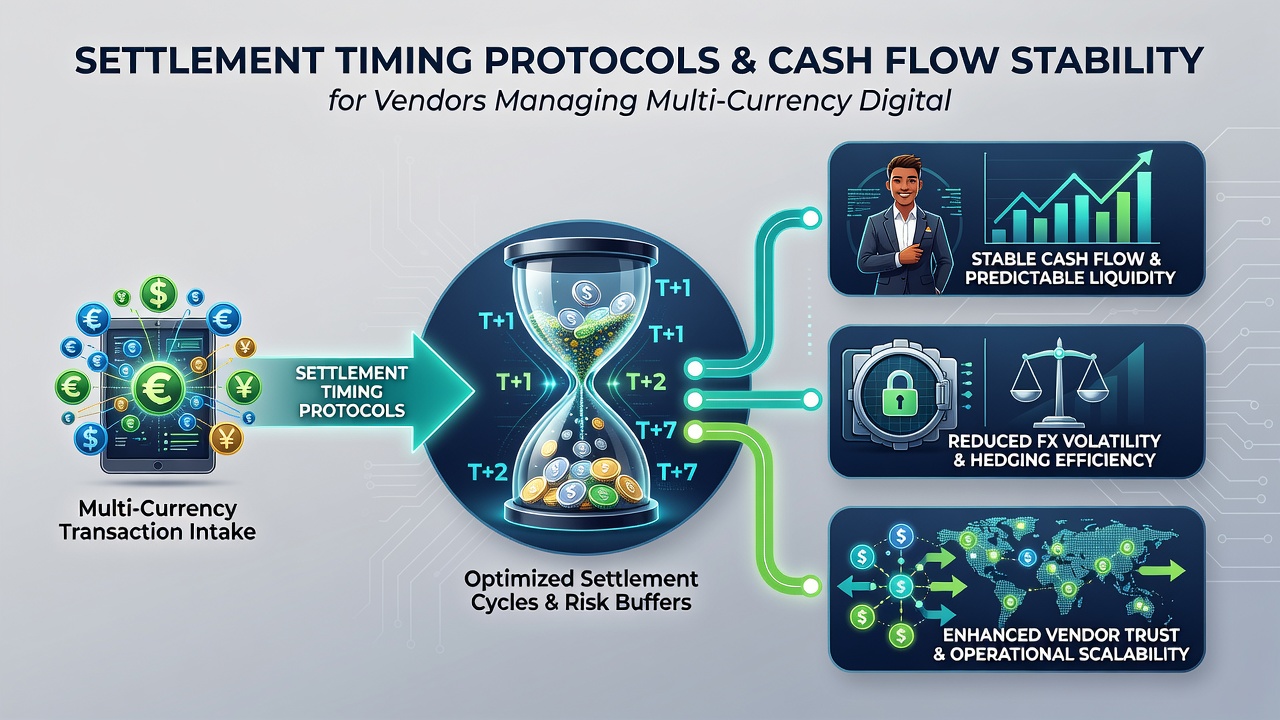
Acquirer networks batch transactions daily or in real time depending on the protocol in place, then forward cleared amounts to merchant accounts after deducting fees and completing currency conversions. Protocols specify windows for fund movement, such as T+1 or T+2 settlement, while multi-currency flows require additional steps at intermediary banks that hold positions in foreign exchange markets. Researchers tracking payment infrastructure note that vendors managing digital goods experience shorter effective cycles when protocols align batch releases with major trading hours in each currency zone.
Data from the Bank for International Settlements shows average settlement delays of 24 to 72 hours for cross-currency digital sales, with longer lags occurring when vendors process high volumes through emerging market acquirers. These delays create temporary gaps between sale confirmation and cash availability, affecting inventory planning and operational expenses for vendors who rely on steady inflows.
Multi-Currency Factors Affecting Cash Flow Predictability
Currency conversion occurs at the point of settlement rather than authorization in most acquirer setups, which means exchange rate movements between sale date and settlement date alter the final amount vendors receive. Protocols that lock rates at authorization time reduce this variability, whereas those using settlement-day rates introduce exposure that vendors must hedge through forward contracts or reserve buffers. Observers in the payments sector report that digital goods vendors with sales spread across USD, EUR, and JPY see the largest swings when settlement timing stretches beyond 48 hours.
August 2026 brought updates to several acquirer protocols that shortened reconciliation windows for digital product categories, allowing same-day netting across three major currencies in select networks. Those changes followed testing phases that began in early 2025 and produced measurable reductions in float periods according to figures released by the European Central Bank.
Protocol Variations Across Regions and Their Effects
North American acquirers typically apply end-of-day batching with next-business-day settlement for domestic digital sales, while international legs extend to T+2 when Asian or Latin American currencies are involved. European networks often incorporate real-time gross settlement options for higher-value digital goods transactions, yet these carry stricter eligibility rules tied to transaction size and merchant history. Vendors operating globally therefore segment their processing streams by region to match the fastest available protocol for each currency pair.
Studies conducted by academic teams at the University of Melbourne examined 18 months of transaction data and found that vendors using unified acquirer protocols across currencies reduced cash flow variance by 31 percent compared with those relying on fragmented regional processors. The same research highlighted that timing mismatches between settlement batches and local banking cut-off times created the primary source of unpredictability.
Practical Adjustments Vendors Apply
Vendors implement rolling reserve strategies and automated FX hedging tied directly to settlement calendars published by their acquirers, which allows them to forecast available balances with greater accuracy. Some establish secondary merchant accounts in key currency hubs to accelerate local settlement before cross-border transfer, shortening the overall cycle by one full day in many documented cases. These steps require coordination with acquirer technical teams to ensure protocol compliance remains intact.
Protocol documentation from acquirers also specifies dispute resolution windows that run parallel to settlement, meaning vendors must maintain liquidity buffers sufficient to cover potential reversals during the hold period. Data compiled by the Reserve Bank of Australia indicates that digital goods merchants who align their internal reporting systems with acquirer settlement feeds achieve reconciliation accuracy above 98 percent on a monthly basis.
Conclusion
Settlement timing protocols continue to evolve as acquirer networks refine batching rules and currency handling procedures for digital goods sales. Vendors who map these protocols against their sales geography and maintain aligned forecasting tools see improved stability in available cash across multiple currencies. Ongoing adjustments in 2026 reflect broader industry efforts to compress float periods while preserving security and compliance requirements.